
Finding Woodstock Resident Records
Choose the first record by what you know. Put an address into the Cherokee County property search, where the location address, parcel number, owner, legal description, and current assessment connect a physical property to an official identifier. Check a name against the owner roll, deed index, court index, business filings, or professional credentials. For an older address, move through deeds, tax digests, census schedules, and any directory volume the local library can confirm.
Each source describes a role, not a complete household. A tax card names an owner but may carry a different mailing address. A deed names parties to a transaction. Voter files cover registered voters and can omit protected addresses. Courts identify case parties, not everyone with that name. Confirm a likely match with two independent anchors, such as a parcel and deed citation or a full name and dated filing.
- Search the property roll by owner name or location address.
- Keep the parcel ID, legal description, and separate situs and mailing addresses.
- Use the owner and book/page reference in the Landmark deed index.
- Check the appropriate voter, court, business, license, or historical source.
- Request the underlying record when an online index is incomplete.
Woodstock Records Are in Canton
Woodstock is not the county seat. The records that most often connect names and addresses are administered by Cherokee County in Canton, while Woodstock keeps ordinances, minutes, permits, municipal cases, and city GIS layers. The Clerk of Superior Court records deeds and plats; the Board of Tax Assessors maintains parcel cards; and Elections and Voter Registration administers voter records. The Woodstock street directory gives the address-by-address workflow.
City and county records should not be mixed simply because both describe a Woodstock address. A city permit can identify an applicant, contractor, work description, status, and inspection dates, while the county parcel card identifies the assessed owner. Municipal Court records concern Woodstock ordinance and traffic matters; Superior and State Court files remain with county clerks. Use the city department for the city-created document and the county office for deeds, taxes, probate, elections, and most court files.
Cherokee County Deeds and Records
90 North Street, Suite G-150
Canton, GA 30114
Woodstock Owners and Addresses
The Cherokee County property search is the strongest first stop for a current address. It accepts an owner name, location address, parcel number, or map reference. A parcel card may provide owner and co-owner names, owner mailing address, situs, tax district, legal description, values, building characteristics, transfer history, and exemption indicators. Always record the tax year.
| Search key | Best use | Keep from result |
|---|---|---|
| Owner name | Find parcels tied to a person or entity | Exact spelling and co-owner |
| Location address | Identify one physical property | Situs, parcel ID, map link |
| Parcel number | Follow property through address changes | Legal description and district |
| Map | Compare adjoining tracts | Boundaries and nearby IDs |
Key distinction: owner mailing and property situs addresses answer different questions. An out-of-town mailing address suggests the owner may not occupy the parcel. A homestead indicator supports owner occupancy without identifying every resident.
Woodstock Deeds Connect Names
The Landmark Web Official Records Search indexes Cherokee County recorded documents. Search by party name, recording dates, instrument type, book and page, instrument number, or legal-description terms. Deeds, security deeds, cancellations, liens, and plats establish dated relationships among people, entities, and parcels. They do not prove residence.
When a parcel card gives a book and page, use it first. Capture the instrument number, recording date, grantors, grantees, legal description, and return-to party. To move backward, take the seller named as grantor and search that person as a grantee earlier. Landmark does not publish its exact online start year. If a book or image is absent, use GSCCCA or the Deeds and Records counter rather than treating the gap as proof.
Plats are especially useful when a street address is new or inconsistent. A subdivision, lot, block, land lot, district, and section can bridge the assessor card to the recorded instrument even when the mailing label has changed. The underlying Cherokee land-lot framework predates modern roads. Keep both the modern address and the legal description in research notes so later searches do not depend on one naming system.
Postal Woodstock Is Larger
Woodstock mailing labels do not match the incorporated boundary. ZIP Codes 30188 and 30189 extend into unincorporated Cherokee County, so “Woodstock” on mail does not establish city police, permit, ward, or open-record jurisdiction. County deed, tax, probate, and voter jurisdiction remains Cherokee County. Confirm municipal status in the Woodstock city GIS.
City metadata documents Hames Road parcel annexations in November 2024, further additions in 2025, and updates through August 2026. A mailing label can remain unchanged while municipal jurisdiction changes. Date the map or ordinance used and carry the parcel ID and land-lot description between systems.
Current Woodstock Directory Sources
Modern directory work means selecting an official roll for one relationship. The owner roll connects owners with taxable parcels. The voter system confirms an individual's own registration, while public voter lists are requested separately. Recorded documents identify transaction parties. Staff pages identify public roles, and association material may supply public contacts without exposing private membership.
| Source | Who It Lists | Keeper | Access |
|---|---|---|---|
| Property roll | Parcel owners | Cherokee Tax Assessors | Free portal |
| My Voter Page | The verifying voter | Georgia SOS | Identity-gated |
| Recorded-document index | Instrument parties | Superior Court Clerk | Index and counter |
| City staff pages | Officials in public roles | City of Woodstock | Free online |
| Association contacts | Public officers or agents | Association or SOS | Varies |
No source covers all residents. For a disciplined name-first process, use the Woodstock resident lookup and verify identity across independent sources.
Woodstock Voter Record Limits
Georgia My Voter Page is an identity-gated self-service tool. It can confirm status, registration date, residence context, precinct, polling place, districts, ballot status, and elected officials for the voter who supplies identifying data. It is not a public name browser for checking other people.
Public voter lists are a separate product requested from election officials. They may contain names, residence or mailing fields, status, precinct, districts, and participation history, but never how a person voted. VoteSafe deliberately protects qualifying addresses. An unsuccessful self-lookup or a gap in a public file is not proof that someone is unregistered.
Woodstock Court Name Searches
Choose the court before searching. Woodstock Municipal Court handles city ordinance and traffic matters. Cherokee Magistrate, State, Superior, and Probate courts have separate jurisdictions; Superior Court handles general civil matters, felonies, divorce, and title issues, while Probate handles estates and guardianships. Federal cases use PACER.
The Georgia Courts E-Access page directs users to providers rather than offering one statewide database. Accounts, coverage, fees, and fields vary. Record the court, case number, filing date, case type, party role, docket events, and disposition, then check the clerk's file. A shared name alone does not identify a Woodstock resident.
The official gateway shows why court selection comes before a party search. 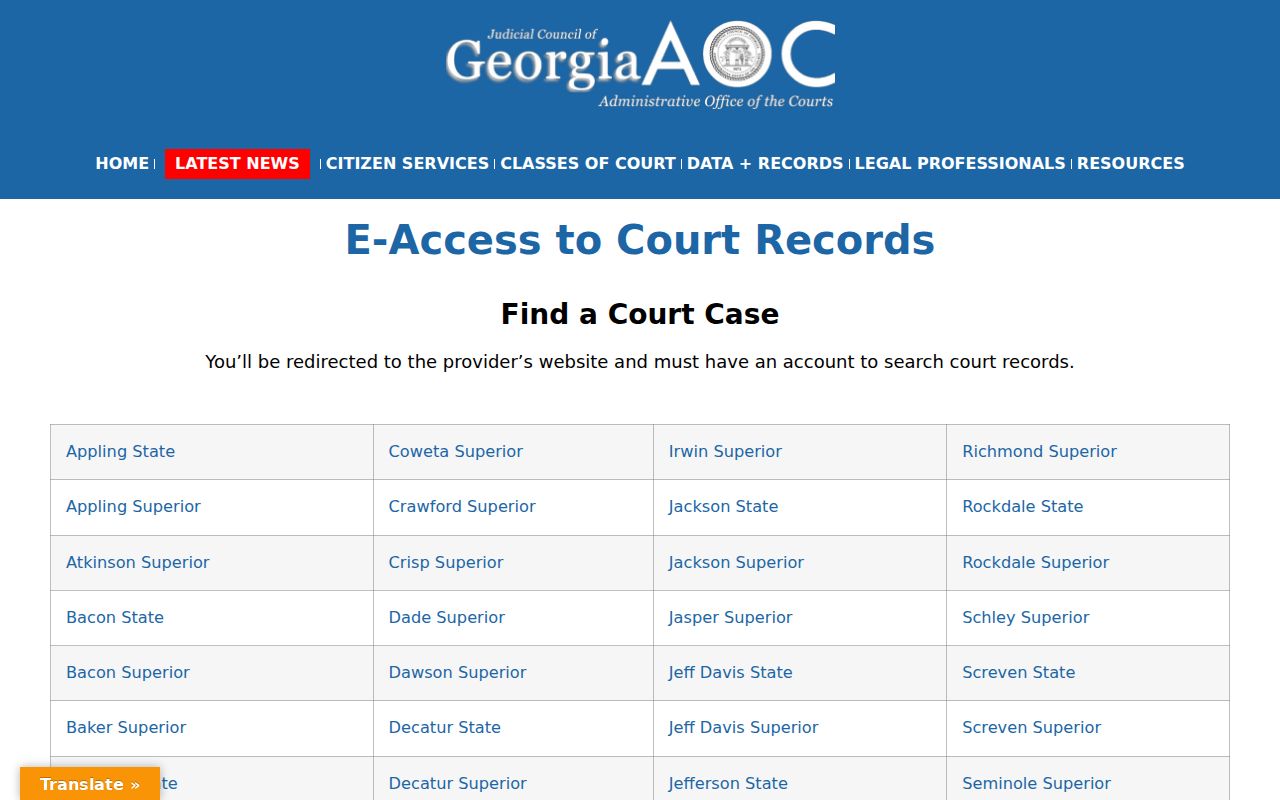
The linked court or provider remains the source for the docket and documents.
Woodstock Vital Record Routes
Vital-record access separates public information from eligibility for a certified copy. Georgia DPH holds statewide births and deaths and marriages from 1952 through 1996. Cherokee Probate Court handles county marriage documents, and Cherokee Superior Court holds divorce files. Birth certificates remain restricted, while county death, marriage, and divorce material may be accessible subject to redaction and court limits.
The Georgia vital-record guide lists online, mail, and in-person channels. Current state guidance gives $25 for a first birth or death certified copy and $5 for same-order extras; state marriage records cost $10 with $5 extras. Cherokee certified marriage applications or certificates cost $10 each. Eligibility, identification, and timing depend on the request.
The state guide separates certified-copy ordering from historical or court research. 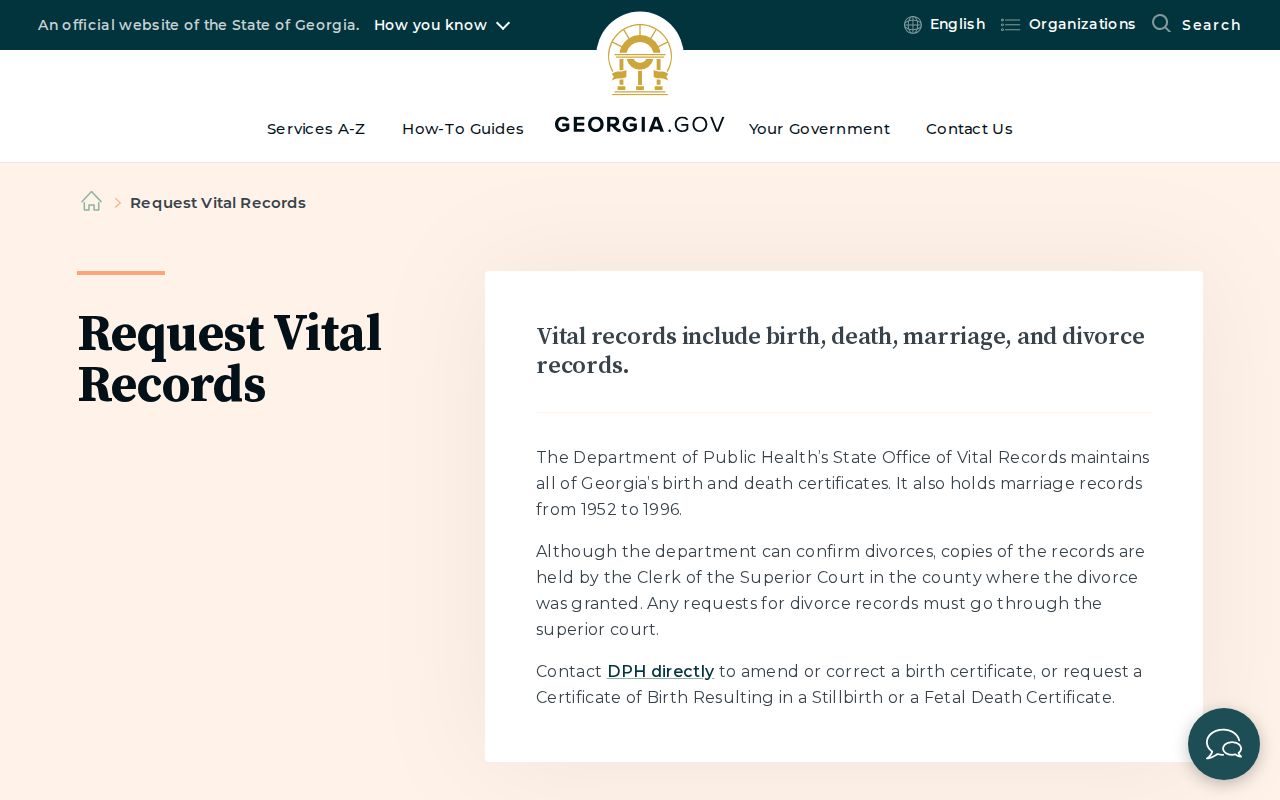
Use the current application because requirements and channels differ by record type.
Woodstock Business Connections
The Georgia Corporations Division search can connect a name with an entity as an officer, organizer, or registered agent. Search by entity name, control number, agent, or officer, then capture status, formation date, principal office, registered office, and filing history. These are business-role addresses, not automatic residence evidence.
Professional credentials use the separate Georgia license verification service. Match the full credential number, profession, status, issue or expiration dates, and public discipline link. Woodstock occupation-tax records may add a local business location through a focused city request, but an agency need not create a new compilation.
County trade-name filings can add another business connection, and UCC records may identify parties and filed addresses in a financing transaction. Neither source declares where a person lives. Compare the filed address with a parcel, deed, court, or other dated official source, and pay attention to whether the person appears as an agent, officer, debtor, owner, or license holder. Those roles are not interchangeable.
Requesting Missing Woodstock Records
When an index stops short, send a narrow written request to the custodian. Georgia's Open Records Act, O.C.G.A. §§50-18-70 through 50-18-77, requires a response within three business days. That response can provide records, an availability date and estimate, or a precise exemption. The deadline is not always a production deadline.
Name the department, record, date range, address, parcel or case number, and preferred electronic format. Ask for an existing export rather than a newly created summary. The first 15 minutes of administrative time are free; qualifying labor uses the lowest-paid capable employee, and general guidance allows up to 25 cents per page. The Attorney General's instructions are the statewide fallback.
The official guide also links a general request form. 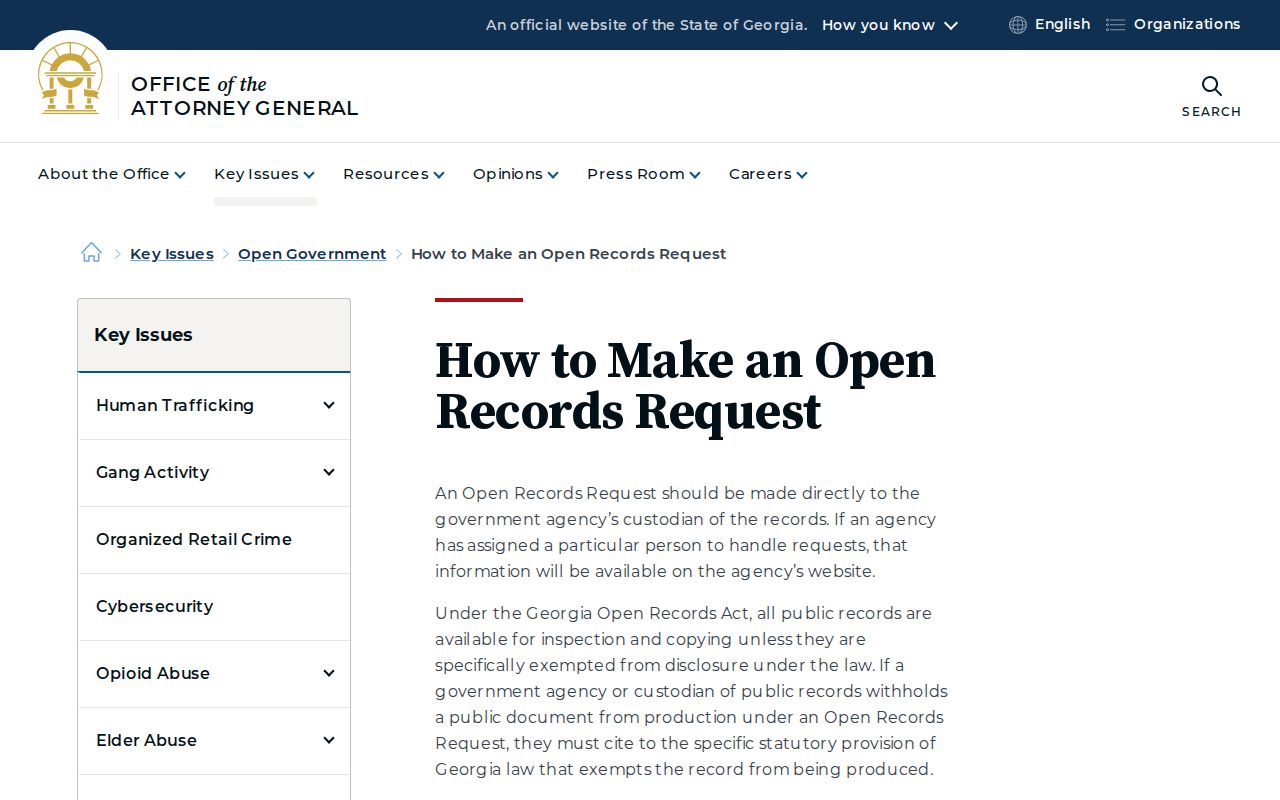
A precise description makes it easier for the office to locate the existing file.
Woodstock Records Across Eras
Woodstock grew from 23,896 people in the 2010 Census to 35,065 in 2020, with a 2025 estimate of 39,895. Newer subdivisions are more likely to appear in standardized addresses, electronic parcel cards, plats, permits, and GIS. Older downtown properties may require deed books, tax digests, census schedules, telephone books, and library files.
Current evidence
Parcel search, GIS, deed index, court providers, state business and license tools, and city ordinance layers.
Historical evidence
Deed books, tax digests, probate, census, archive microfilm, maps, newspapers, and confirmed directories.
Official systems supply a citation and custodian. Commercial people-finder summaries can mix stale addresses and same-name records, so treat them only as unverified leads.
Historical Woodstock Directory Research
No authoritative online shelf list establishes a complete standalone run of Woodstock directories, publishers, or reverse-directory years. Ask Sequoyah Regional Library staff to check Cherokee and Atlanta-area telephone books, directories, yearbooks, newspapers, local-history shelves, and uncataloged files. GALILEO resources may require a card or library visit.
Georgia Archives county microfilm includes pre-1900 Cherokee deed books, tax digests, and court and probate material. Public federal census schedules extend through 1950. The Woodstock city directory guide explains how to read alphabetical and street sections, pair years with census or tax evidence, and document gaps rather than treating an omission as proof.
A verified 1832 Cherokee land-district plat in the Georgia Archives preserves the survey geography that still appears in legal descriptions. It establishes the land framework, not later ownership. Pair it with deed books and tax digests. A 1921 Sanborn map exists for Canton, but no authoritative Woodstock-specific Sanborn sheet was located, so Canton sheets must not be presented as Woodstock house evidence.