
Woodstock Previous-Resident Sources by Era
No one roll covers the full life of a Woodstock address. Start with the newest reliable parcel and move back. The current card identifies the land; deeds carry title between owners; household sources can test who lived there. Exact Woodstock directory years and Landmark’s first online year are not published, so the table keeps those gaps visible.
| Source | Years it covers | Where held | What it shows |
|---|---|---|---|
| Assessor parcel card | Current; transfer depth varies | Cherokee property search | Owner, situs, mailing, parcel, sales |
| Landmark deed index | Online cutoff not stated | Clerk, Landmark, GSCCCA | Grantor, grantee, recording, legal description |
| County deed microfilm | Principally pre-1900 | Georgia Archives, FamilySearch | Deed books and indexes |
| Tax digests | Principally pre-1900 digitized holdings | Archives and county | Taxpayer and valuation |
| City or reverse directories | Exact Woodstock years unverified | Library and History Cherokee | Listed occupant or subscriber |
| Federal census | Public through 1950 | NARA and library databases | Household members and later addresses |
| Permits | Online start not verified | Woodstock or county request | Work, applicant, contractor, inspections |
The date being researched controls which row comes next. For a recent transfer, the deed and parcel card lead. For an early house, legal descriptions, microfilm, tax books, census schedules, and local shelf material carry more weight.
Start Woodstock Address History by Parcel
Enter the situs address in the Cherokee County property search. Save the parcel ID, owner as printed, owner mailing address, physical situs, legal description, subdivision and lot, sale citation, and any exemption indicator. Search without a street suffix if the first form fails. Then open the map and verify that the result is the correct tract.
A mailing address answers where the tax notice goes. The situs address identifies the assessed land. When they match and a homestead indicator appears, owner occupancy is supported, but that still does not name every person in the household. When they differ, the card proves ownership and gives a lead, not residence. This distinction keeps past residents from being confused with absentee owners.
Note: Record the tax year because a new deed may appear before the assessor updates the owner field.
Walk Cherokee Deeds Backward
The Landmark Web Official Records Search indexes parties and instruments. It may not index a modern street address. Use the assessor’s book and page, current owner, sale date, and legal description to find the acquisition deed. Read the instrument itself whenever an image is available.
- Copy the current parcel ID and complete legal description.
- Find the present owner’s acquisition deed by book and page or grantee name.
- Take the seller, who is the grantor in that deed.
- Search that seller as a grantee in an earlier date span.
- Match the same lot, land lot, district, or subdivision before accepting the result.
- Repeat until the online index ends, then move to the clerk or microfilm.
- Grantor
- The party conveying an interest in the recorded instrument.
- Grantee
- The party receiving that interest.
- Chain of title
- The linked series of conveyances for the same land.
- Legal description
- The lot, block, subdivision, land-lot, district, or boundary text that identifies the land.
This seller-as-earlier-grantee method is the key shortcut for previous residents research. Do not skip a trust, estate, corporate owner, or low-value conveyance. Each may be an essential link.
Search Woodstock Deed Parties Carefully
Landmark offers more than a name box. Use the narrowest known field, then widen the search for spelling variants. The exact option list and result cap were not exposed in the official public landing page, so avoid claiming features that the live system does not show.
| Search mode | Best use | Check beside it |
|---|---|---|
| Party name | Grantor or grantee search | Surname variants and time span |
| Date from and to | Narrow a common name | Recording date, not just sale date |
| Book and page | Direct citation from a parcel card | Instrument image and legal text |
| Instrument number | Exact recorded-document lookup | Type and recording date |
| Legal description | Subdivision, lot, land lot, district | Same parcel identity |
A result may show instrument number, book and page, recording date, document type, grantors, grantees, legal description, return-to party, and image status. The Clerk’s deed FAQ points to Landmark, GSCCCA, and the Deeds and Records counter at 90 North Street, Suite G-150, Canton. The page does not state the first online index year.
When Woodstock Deeds Leave the Web
An online dead end is not the end of the chain. Ask the Cherokee County Clerk of Superior Court for the relevant grantor or grantee index, deed book, plat, and date span. GSCCCA is another route identified by the clerk. For older material, use the Georgia Archives county microfilm catalog and FamilySearch. The Archives says most county microfilm is pre-1900, although a book begun before 1900 can extend later.
The Georgia Archives Virtual Vault is pictured below and requires no public login.
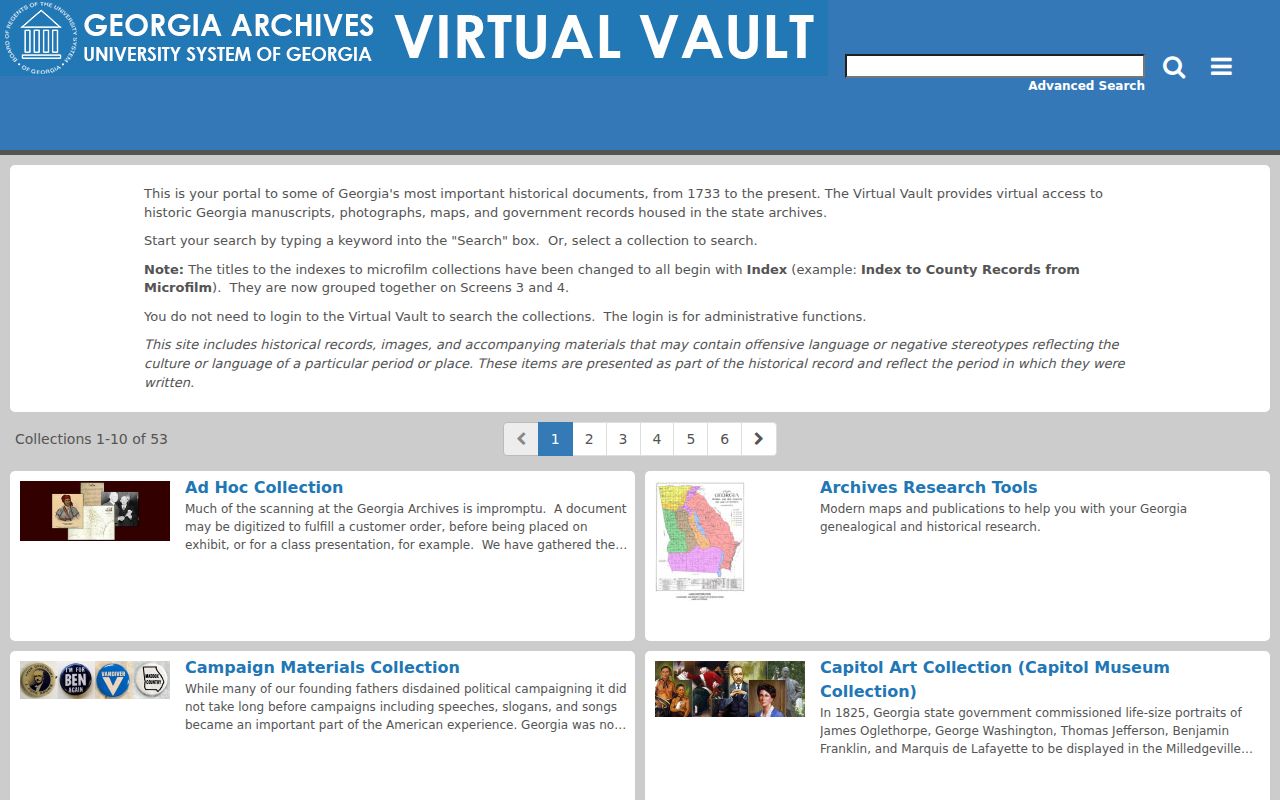
Use the county catalog to identify the series, then retain volume, page, and image number. If the clerk must search, provide both party roles, a tight date range, and the legal description.
Woodstock Past Residents Beyond Owners
Owners are only one layer. A reverse or criss-cross directory, if local staff confirm one, can turn an address into a listed subscriber. An alphabetical city directory may show a name, spouse notation, work line, and address. Exact Woodstock years remain unknown, so ask Sequoyah Regional Library and History Cherokee for the actual title and year before citing it. The shelf details belong on the Woodstock city directory collections page.
- Choose a target year and retain every form of the street address.
- Check a confirmed directory just before and after that year.
- Pair 1940 or 1950 entries with the corresponding released census.
- Compare names with the deed owner and tax digest without merging the roles.
- Mark “not listed” when the book omits a name.
Renters, rural-route homes, unlisted telephone customers, recent movers, and print lag can all cause a gap. A directory or census can support occupancy. A deed alone cannot.
Date Changes at a Woodstock Address
Permits can place work at the parcel on a date. Request them by street address, parcel ID, permit or case number, contractor, and date range. A file may show the applicant, owner, contractor, work description, valuation, status, and inspections. It does not prove that any named applicant lived there. No stable official public permit-search form or online start date was confirmed.
Maps need the same care. The statewide Sanborn collection covers 1884 through 1941, and a 1921 Canton map is verified, but no Woodstock-specific sheet was found. Do not use Canton as a stand-in. For a Woodstock parcel, the subdivision plat and legal description may be better evidence of its older form.
Note: Physical evidence can explain a rebuilt or renumbered place, but it does not supply a household name by itself.
Follow Woodstock Residents into Probate
When a deed chain stops at a deceased owner, an obituary and estate file may reconnect the trail. An obituary can name relatives, funeral home, cemetery, and a residence at publication. The Cherokee Probate Court file may identify the decedent, petitioner, personal representative, heirs in public filings, and estate property, while protected exhibits can be sealed or redacted.
Contact the Cherokee County Probate Court with the name and approximate date. Then compare the estate deed or later conveyance with the parcel’s legal description. This is a strong human-use route for family history and heir questions, but kin named in a notice should still be checked against the official file.
The Georgia Unclaimed Property Program may offer a last-address or locality lead. Its result is not proof of current location, and a claim requires identity and ownership evidence.
The state program page shown below is the official place to check before dealing with an unsolicited finder.
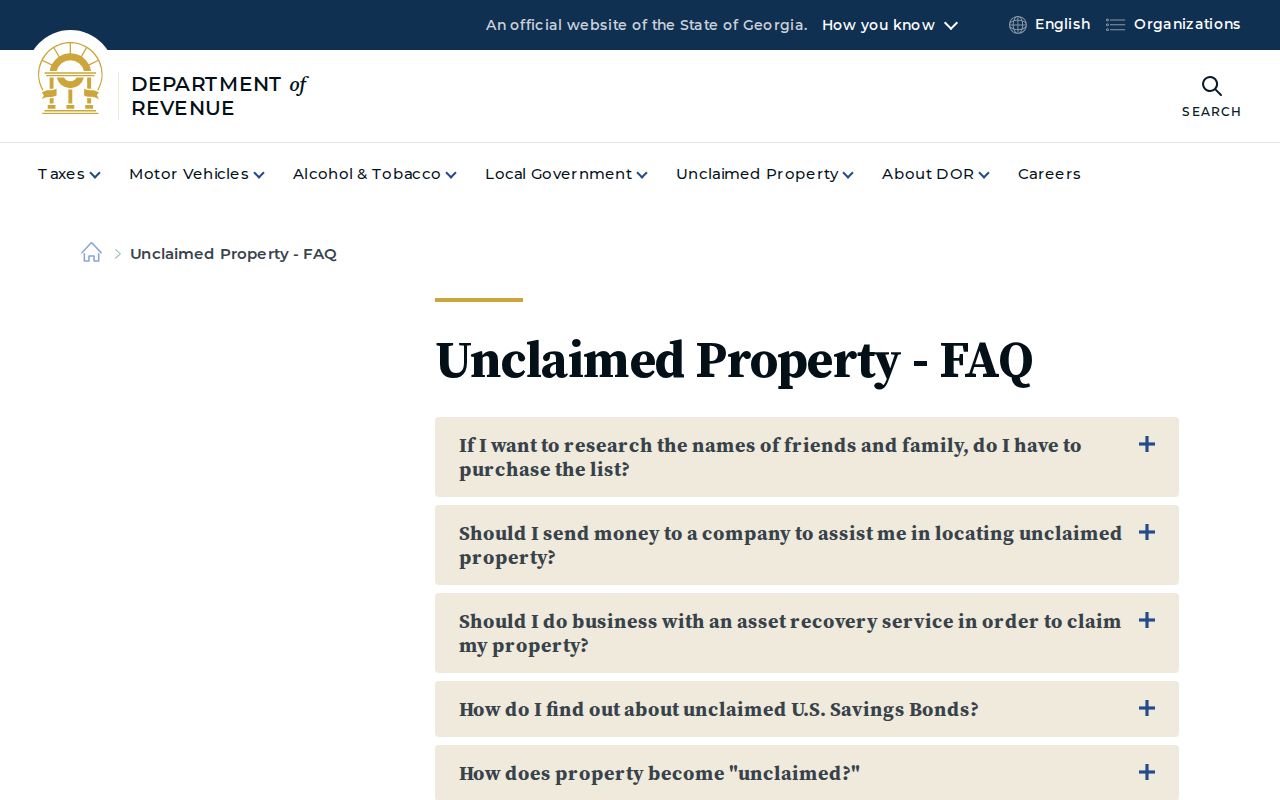
Keep the holder or locality clue separate from verified residence until another record connects it.
Keep Woodstock Parcel Identity Through Change
Woodstock has no verified citywide street-renumbering year in the research. The stronger local trap is jurisdiction change. The city historical-ordinance GIS identifies parcel-specific annexations through 2026, including Hames Road parcels added in November 2024 and more additions during 2025 and 2026. A mailing address may continue to say Woodstock while the municipal custodian changes.
Use parcel ID, recorded plat, land lot, district, and deed description to bridge that shift. City permits, police, wards, and municipal files depend on city limits at the relevant date. Deeds, tax, probate, and most court records remain Cherokee County matters centered in Canton. The 1832 district plat can explain the old land-lot frame, but it cannot name a later owner or resident.
Address rule. Preserve postal, situs, and legal descriptions separately because each follows a different record system.
Use Previous-Resident Records Lawfully
House history works best as a citation trail, not a list of people copied out of context. Date each record. Keep owner and occupant in separate fields. Do not publish protected identifiers, confidential addresses, or details that could expose a living person to harm. VoteSafe can remove qualifying voter addresses, and ordinary ownership files do not reveal children, renters, or all adults in a household.
If an index lacks an image or year, ask for the existing record through the proper custodian. A narrow written request under the Georgia Open Records Act should identify the department, record type, date span, parcel or case number, and desired electronic format. The three-business-day rule governs the agency’s response, which may give an estimate or production date rather than the records themselves.
Lawful use. Research previous residents for family history, estate work, or care for an old home. Never use an address trail to stalk, harass, or harm anyone.