
Woodstock Resident Lookup Sources
No single custodian keeps a complete list of people in Woodstock. A useful resident lookup asks a narrow question, then chooses the record built to answer it. Ownership belongs to Cherokee County tax and deed systems. Court party records are split by jurisdiction. Georgia agencies maintain voter, business, license, and vital-record systems. The source date matters because each roll changes on its own schedule.
| Record | What It Confirms | Keeper | Access |
|---|---|---|---|
| Parcel card | Owner, situs, mailing address, parcel identity | Cherokee Board of Tax Assessors | Free web search |
| Recorded deed | Named parties, date, legal description | Superior Court Clerk | Landmark index, GSCCCA, or counter |
| Voter record | Registration, address, status, precinct at a date | Georgia SOS or Cherokee Elections | Identity-gated self-check or lawful file request |
| Court docket | Case, party role, events, outcome | Correct city, county, or federal court | Provider account or clerk request |
| Vital or probate record | Life event, estate role, or kin link | DPH, Probate Court, or Superior Court | Public index/file rules differ from certified copies |
| Business or license filing | Public role, credential, and dated affiliation | Georgia Secretary of State | Free official search |
Start with the fact already known. An address points first to the assessor. A company link belongs in the corporation search. A legal matter requires the court that heard it. Use the result as a dated placement, not a claim that the person lives at every address shown.
Match Woodstock Names Twice
Woodstock's rapid growth makes same-name errors easy. Match at least two independent anchors before deciding two records concern one person. Useful anchors include a middle initial, a prior surname, the same parcel legal description, an associated person, a business control number, a case number, and a time window. Reject a match when the co-owner, parcel, or dates conflict.
The strongest resident lookup evidence is a dated official record with two identifiers. A current license or filed business role is useful but may show a professional contact. An obituary, yearbook, or directory entry can support a match. An undated name list, OCR text, or same surname in Woodstock is only a lead.
Woodstock quirk. An owner mailing address and a property situs answer different questions. Neither field alone proves who occupies the home.
Verify Woodstock Resident Records
A careful Woodstock resident lookup keeps the source, record date, retrieval date, and match reason beside each result. Begin with the least sensitive official source that fits the question, then use a second custodian to test the identity. Do not force a result when the records disagree.
- Search the assessor owner field when an ownership link is known. Record the parcel ID, situs, separate tax mailing address, and displayed deed citation.
- Use the name and a narrow date range in the right court or deed index. Match the case number, party role, or legal description rather than the city name alone.
- Check a public business or license affiliation when it fits. Treat a principal office, agent address, or professional office as an affiliation, not a home.
- Seek a certified copy only when formal proof is needed and eligibility rules allow it. Otherwise cite the public index or clerk file exactly as found.
- Docket
- The dated list of filings and events in a court case.
- Index and image
- An index helps locate a record; the image contains the filed instrument and may have separate access terms.
- Certified copy
- A custodian-issued copy authenticated for official use. Access can be narrower than access to an index.
- Situs address
- The physical parcel location on the tax roll, kept apart from the address used for tax mail.
Choose Woodstock's Right Court
Woodstock Municipal Court handles city ordinance and traffic matters. Cherokee Magistrate, State, Superior, and Probate courts have different subject matter, while federal cases use PACER. The Georgia court e-access directory routes users to providers; it is not one statewide docket. Provider coverage, syntax, document access, and charges can differ.
| Search field | How to use it |
|---|---|
| Court or county | Select Cherokee and the court with jurisdiction. |
| Party first and last name | Try spelling and surname variants; use partial rules only if the provider supports them. |
| Case number | Use the exact number for a direct lookup. |
| Case type | Narrow civil or criminal categories when available. |
| Filed dates | Reduce false matches for common names. |
A typical docket lists the court, case number, style, filed date, status, parties and roles, counsel, judge, events, hearings, and disposition. It records allegations and process, not a blanket judgment about a person. If the provider has no hit, ask the specific clerk for an index check using the name and approximate year.
The Cherokee courts gateway shows the local court route.
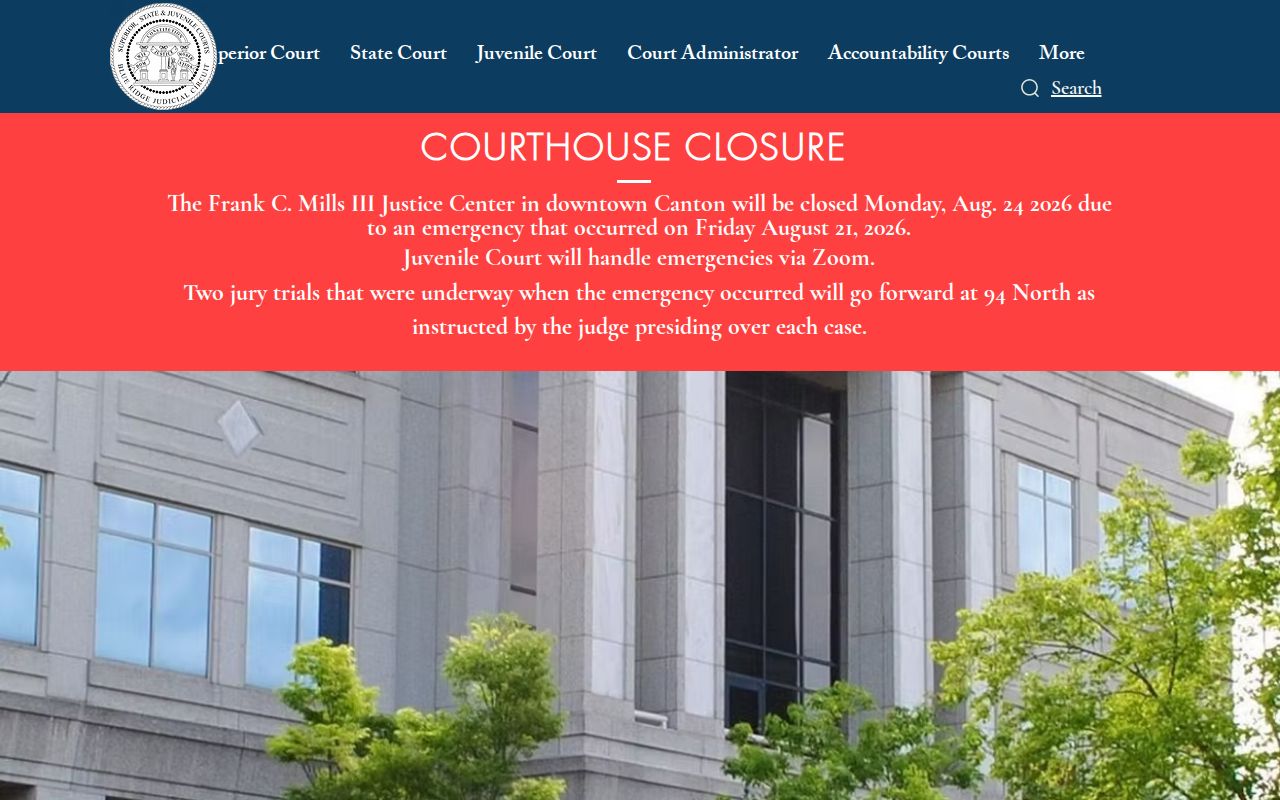
The gateway helps identify the clerk that can confirm the file when an online provider is incomplete.
The Blue Ridge Judicial Circuit Superior Court page identifies the court for general civil, felony, divorce, and title matters.
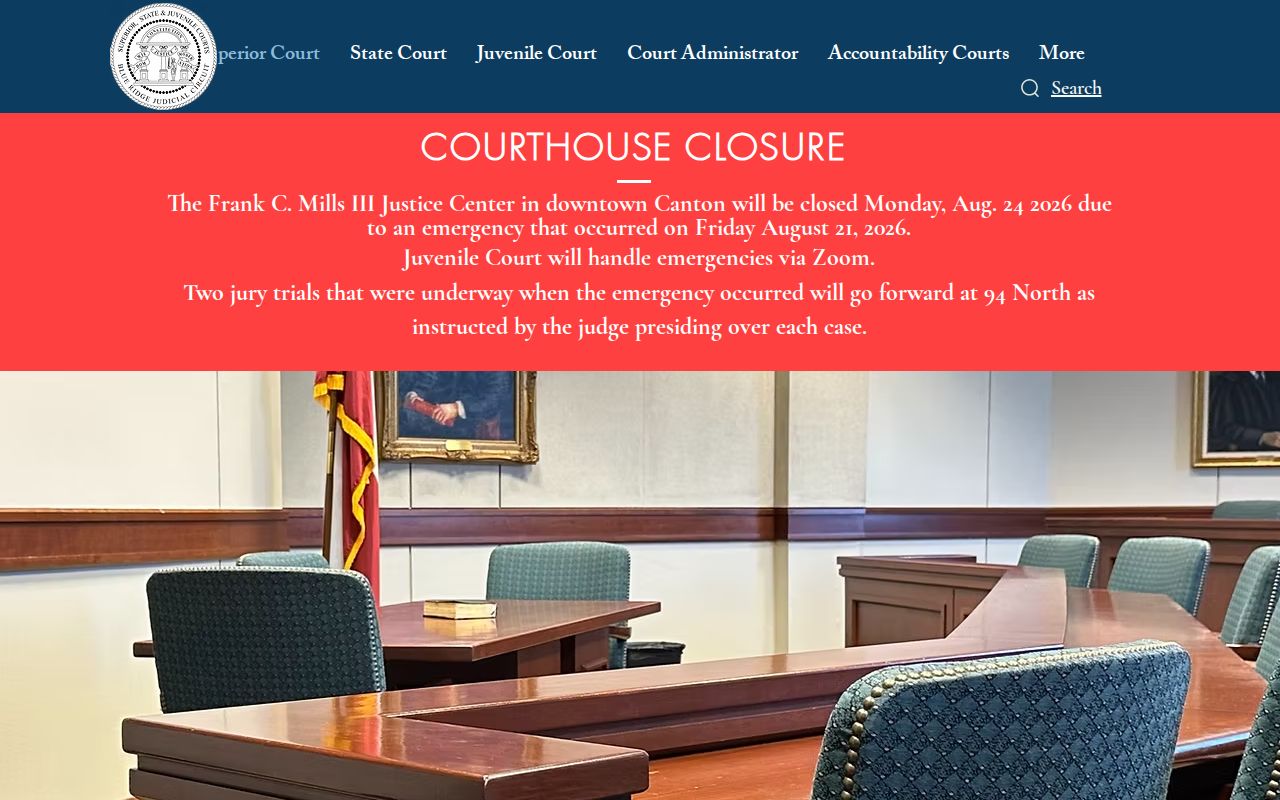
This court-specific route prevents a name search from being sent to the wrong clerk.
Federal cases use the official PACER service after account registration.
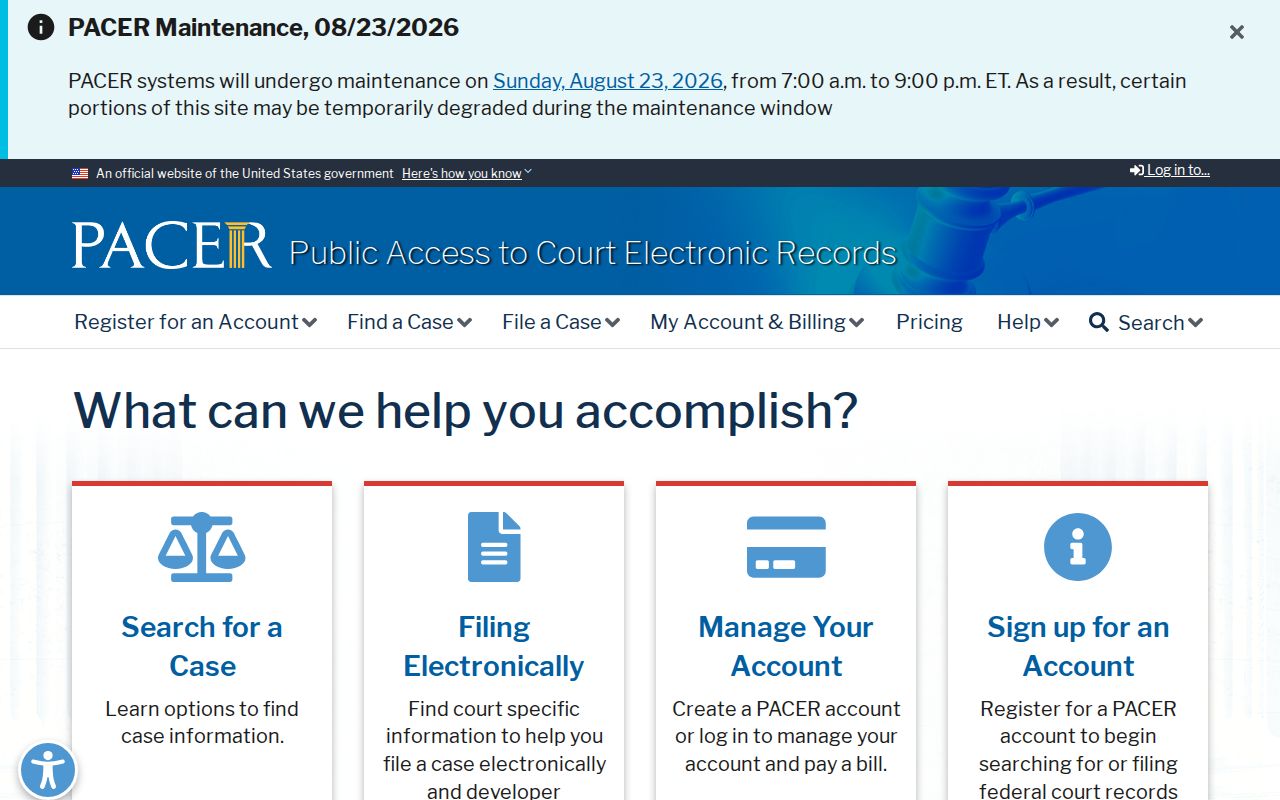
PACER results should be matched by case number, court, and party role, not by name alone.
Compare Woodstock Voter Routes
Georgia My Voter Page is a self-verification tool. It asks for first initial, last name, Cherokee County, and date of birth. A matched voter can see status, the registration information on file, precinct and polling details, elected officials, sample ballot, and ballot-status information. It is not an open name browser.
Public voter lists are a separate request product. Georgia law makes names and addresses public, but sensitive identifiers are withheld and VoteSafe shields qualifying residence addresses. Request an existing list or export through the Secretary of State or Cherokee Elections, stating the fields, format, county or precinct, and date range. The resident lookup must not try to defeat MVP's identity gate.
Comparison: MVP answers a person's own registration question. A lawful public-list request supplies defined public fields for civic research. Neither route lists every Woodstock resident, and participation history never reveals ballot choices.
Confirm Woodstock Public Affiliations
The Georgia Business Search accepts business name, control number, registered agent, officer, or designated agent. Results may show entity status, formation, principal office, agent, officers, and filing history. An address in a filing may belong to a business or agent, so it does not establish residence.
The professional license verification can use profession, license type, first or middle name, last name, and license number. The official search supports an asterisk after partial text and advises that less input can work better. Confirm license number, type, status, issue and renewal dates, then compare any public board document only after the identity matches.
Trace Woodstock Heirs Lawfully
Probate, an obituary, and a deed can connect a deceased owner to family without guessing. Start with the parcel and acquisition deed, then search the Cherokee Probate Court for an estate. A public petition may identify the decedent, petitioner, and heirs, though exhibits and protected data can be redacted. Corroborate names and dates with an obituary, cemetery source, or death record.
Certified vital records follow stricter eligibility rules than public indexes and county court files. Georgia DPH holds statewide birth and death records and marriage records for 1952 through 1996. Cherokee Probate handles marriages licensed there outside the state span, while divorce files remain with Superior Court. State-held records transfer to the Georgia Archives after the statutory periods, but a transfer date does not erase all redaction or copy rules.
The Georgia vital-record request page explains online, mail, and counter channels.
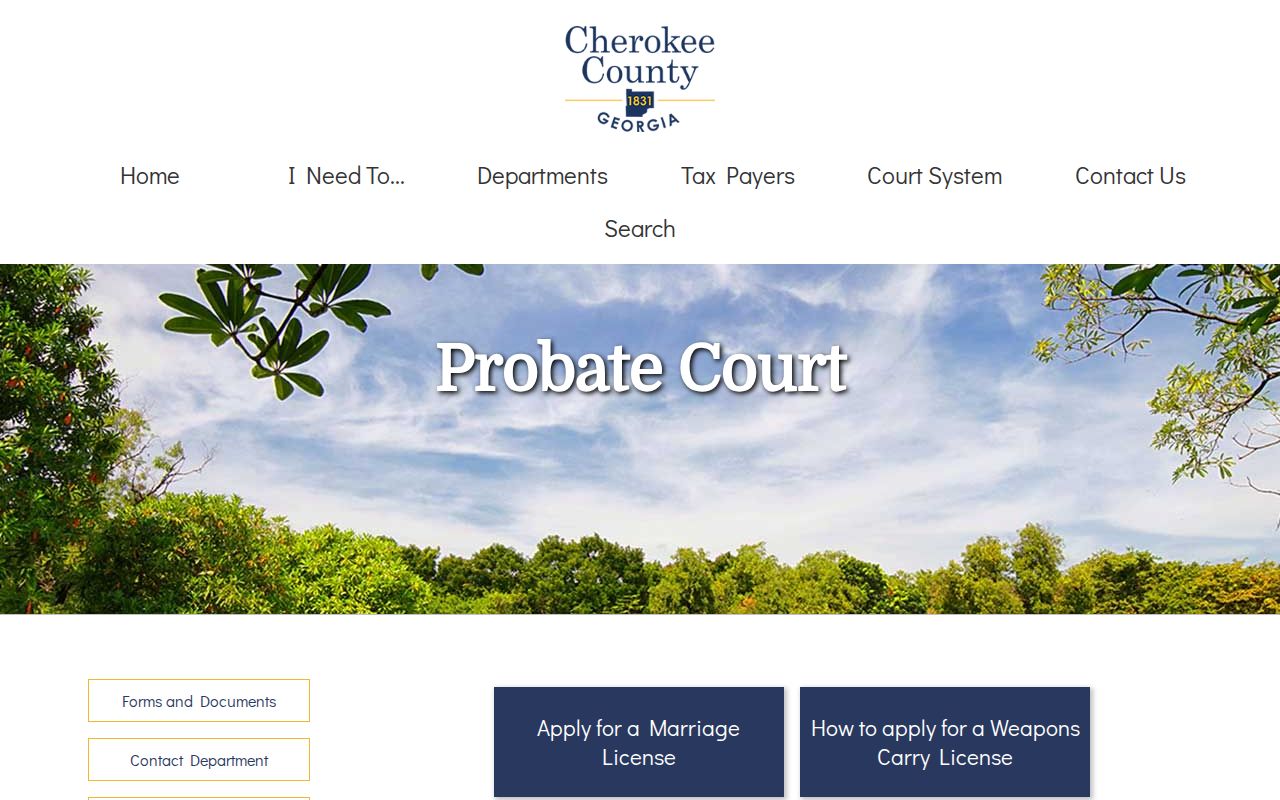
The probate route is especially useful when a deed trail ends with an estate rather than a normal sale.
Request Missing Woodstock Records
When a portal stops short, identify the custodian and ask for an existing record. Under the Georgia Open Records Act, O.C.G.A. §§50-18-70 through 50-18-77, a written request should name the record type, person or case, date range, and desired electronic format. Within three business days, the agency must produce the record or state when it will be available, estimate cost, and cite an exemption for withheld material.
That deadline can produce an estimate rather than the documents. Agencies need not create a new report. Ask for an existing index, docket, database export, or filed item. For deeds, use Landmark, GSCCCA, or the Deeds and Records counter in Canton. For a municipal case, contact Woodstock Municipal Court. For an older court record, ask whether the file is archived offsite.
Woodstock Resident Lookup Limits
Some gaps are required by law. VoteSafe protects qualifying voter addresses. Court sealing, record restriction, juvenile rules, vital-record confidentiality, and O.C.G.A. §50-18-72 redactions limit public fields. The federal DPPA restricts motor-vehicle personal information. A resident lookup should never treat an absent record as proof that no record or person exists.
Correct an error at its source: the assessor for parcel data, voter registrar for registration, Secretary of State for a filing, or court clerk for a docket. Commercial suppression does not erase an official record. Save each request and response so the correction trail remains clear.
Lawful use. Use Woodstock records for lawful personal, family, estate, safety, or civic research. Never stalk, harass, threaten, or intimidate anyone.